
How to Search Kings County Property Records
Every Brooklyn record shares one key. It is the borough, block, and lot number. With that BBL in hand, you can move between city systems without losing your place. Four agencies each publish their own piece. The Department of Finance keeps the tax roll. The City Register records deeds and mortgages. Department of Buildings files hold permits, and City Planning keeps the maps.
An assessment snapshot, a recorded deed, a tax map, and a permit filing each serve a different purpose. Read the source date and the field labels before drawing any conclusion. A figure that looks like an answer may answer a different question.
- Follow the official portal prompts, preserve the BBL and date, and verify the result against the related city record.
- Follow the official portal prompts, preserve the BBL and date, and verify the result against the related city record.
- Follow the official portal prompts, preserve the BBL and date, and verify the result against the related city record.
- Follow the official portal prompts, preserve the BBL and date, and verify the result against the related city record.
- Follow the official portal prompts, preserve the BBL and date, and verify the result against the related city record.
Kings County Property Records Offices
Four offices hold the Kings County records you need. Finance assesses and taxes each Brooklyn lot. The City Register records deeds and mortgages. Department of Buildings files hold permits, and City Planning keeps the maps. Each office publishes its own records, so a complete property search means checking more than one.
Kings County Recorder / Register of Deeds
210 Joralemon Street
Brooklyn, NY 11201
212-487-6300
Kings County Assessor / Appraisal District
210 Joralemon Street
Brooklyn, NY 11201
212-487-6300
Kings County Treasurer / Tax Collector
210 Joralemon Street
Brooklyn, NY 11201
212-487-6300
Types of Kings County Property Records
Kings County records come in several distinct types. The tax roll lists owners and assessed values. Deed records prove who holds title. Tax maps and GIS layers show lot lines, zoning, and planning districts. Permit files from Buildings track what has been built or altered on the parcel.
| Record Type | What It Documents | Kept By | Access |
|---|---|---|---|
| Deeds | Official record detail | NYC City Register | Official record detail |
| Mortgages & liens | Official record detail | NYC City Register | Official record detail |
| Tax & assessment | Official record detail | NYC Department of Finance | Official record detail |
| Plats & parcels | Official record detail | NYC Department of Finance Tax Map | Official record detail |
| Building permits | Official record detail | NYC Department of Buildings | Free public search |
Each record type answers a different question. An appraisal snapshot shows value on a fixed date. A recorded deed carries the legal claim. The plat and tax map trace how a parcel took its present shape. Permits, zoning, and historic district reports add context that no deed can supply.
What Kings County Property Records Can and Cannot Tell You
Kings County records reveal a lot, but not everything. The tax roll names an owner of record as of a fixed date. A later deed may not match it. Maps show lot lines without settling legal boundaries. For title questions, only the recorded deed chain gives a firm answer.
Lawful use. Use these public records only for lawful property research. They do not replace a title search, survey, or legal advice, and they must never be used to harass anyone.
ACRIS Deeds for Kings County
ACRIS is the official deed index for Brooklyn. The Automated City Register Information System covers deeds, mortgages, assignments, satisfactions, and other recorded land instruments from 1966 forward. Search by Brooklyn BBL when you can. Party-name searches work, but they surface lenders, fiduciaries, entities, and unrelated people who share a name. Each promising hit deserves a close look. Check the parcel grid, document type, execution date, recording date, parties, CRFN, references, and the recorded image. Brooklyn deeds go to the City Register, not the Kings County Clerk.
The deed trail does not end in 1966. Pre-1966 Brooklyn books are researched through the Land Records Research Library at the Queens City Register office. Brooklyn itself retains microfilm and microfiche. A known reel and page speeds any copy request. The Brooklyn land-record collection reaches back to 1697, so the ACRIS cutoff is an online boundary rather than the end of the trail.
Kings County Tax Lot Key
Brooklyn is borough 3. That digit starts every borough, block, and lot code. The BBL outlasts street addresses and links the Finance property card, ACRIS, the digital tax map, ZoLa, and many Buildings records. Keep the leading zeroes. Condos, air lots, subterranean lots, co-ops, and merged parcels may call for special search modes.
Three fields sit on the Property Information Portal. Owner Name, Billing Name and Address, and Property Address each mean something different, so do not blend them. The tax roll uses a January 5 status date. A tentative roll lands in January and the final roll in June. A deed recorded later can be newer than the owner name on that assessment snapshot.
Brooklyn Maps and Building Files
The digital tax map rewards a long look. It shows tax-lot context, dimensions, easements, and map history. It is not a legal boundary survey. Historical alteration books can reveal predecessor lots after a merger, apportionment, or condominium conversion. ZoLa layers on zoning, land use, districts, and planning overlays. Building files live in two places. DOB BIS and DOB NOW must both be searched. Older and newer filings sit in separate systems. Historic district maps add a further layer for Brooklyn Heights, Boerum Hill, Carroll Gardens, Clinton Hill, and other designated areas. They tie architectural history to modern tax lots. These sources explain a site, but only the recorded deed chain addresses title.
Kings County Assessment Records
New York City's Department of Finance keeps the assessment roll. It serves as Brooklyn's yearly tax snapshot. The roll lists the owner of record and the billing recipient. It also gives the property address, tax class, and building class. Physical details, estimated market value, assessed-value caps, exemptions, and the taxable value round it out. Taxable status is fixed each January 5. So a deed recorded later can outrun the roll. Keep the fiscal year and the tentative or final label when you cite a figure from it.
The official Brooklyn assessment example puts the owner, billing, situs, land, building, market, and assessed-value fields on one screen.
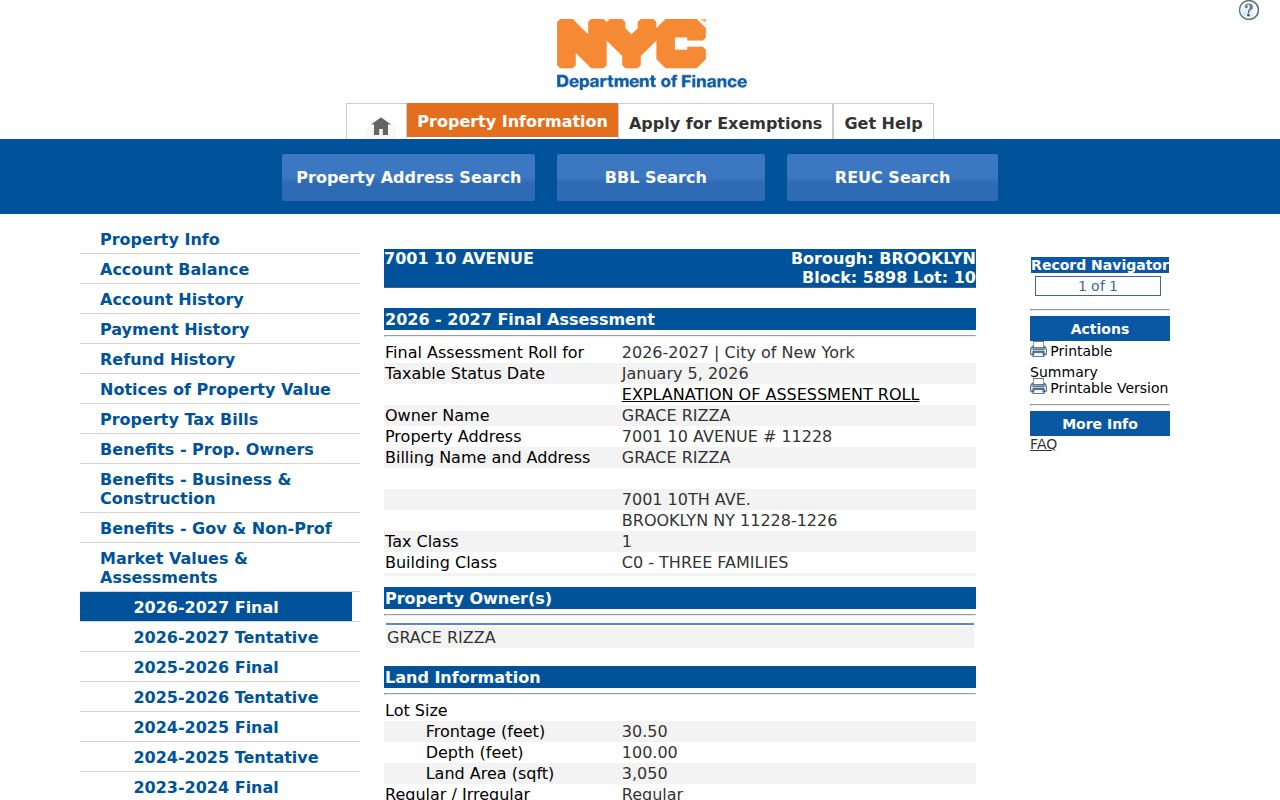
Each labeled field stays distinct in a property record summary, and the example makes that clear.
Kings County Court Property Trails
Kings County Supreme Court files tell a story the deed index cannot. Foreclosure, partition, quiet title, lien claims, and notices of pendency all leave traces there. Search by the current owner name first. Then try former owners too. Match the index number and latest case event against ACRIS before drawing conclusions. A filed action, a judgment, an auction notice, and a recorded referee deed are separate stages. Each one changes what the Kings County property records mean for that parcel.
The New York e-Courts gateway lists the civil and surrogate routes. Those routes handle Brooklyn property disputes.
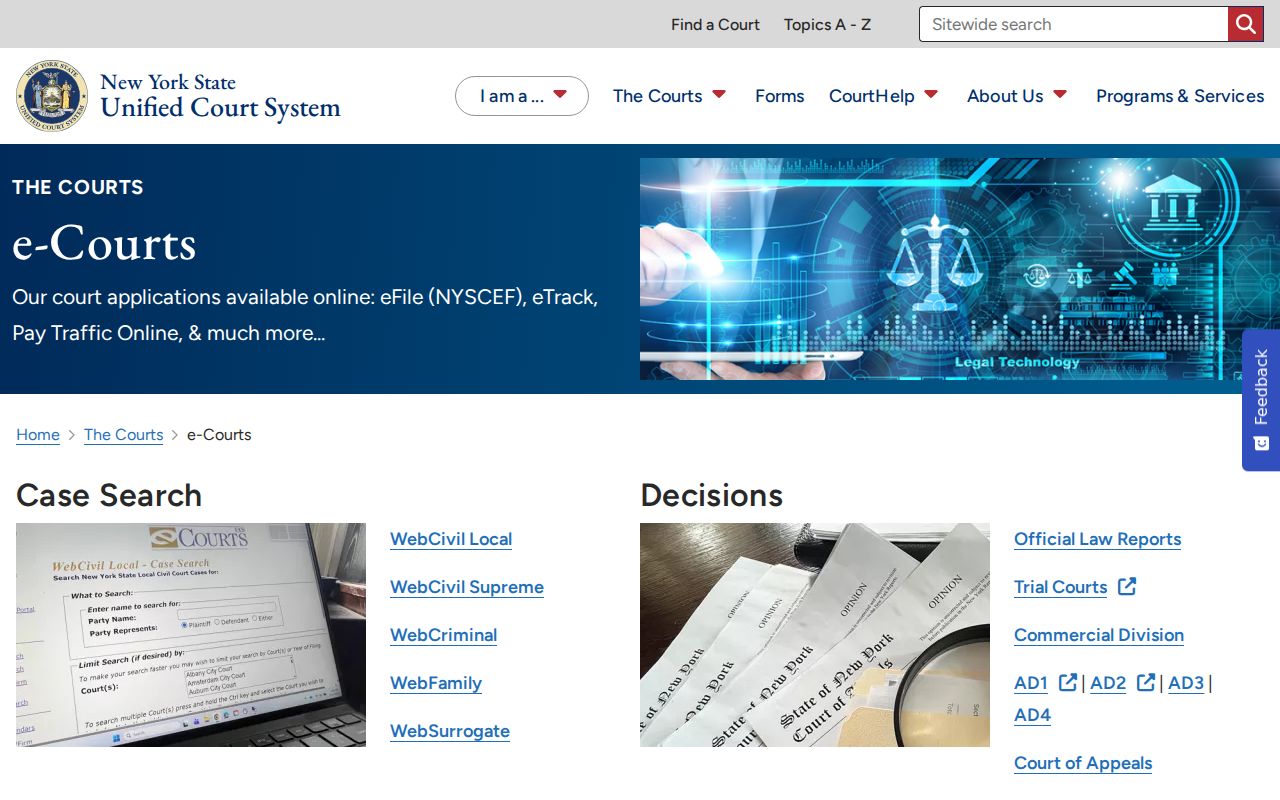
The screen opens court indexes only, not the filed case or the recorded instrument itself.
Estates in Kings County Records
Estate transfers can create a puzzling gap between the assessment owner and the deed grantee. Surrogate's Court records often hold the explanation. They identify the decedent and the fiduciary. They also cover the estate file and any will or administration proceeding behind an executor or administrator deed. The recorded deed still has to tie the estate action to the Brooklyn lot. Its parcel description carries that link. Without that link, the chain stays incomplete.
The official WebSurrogate screen offers name, file, old-index, index-book, and will searches.
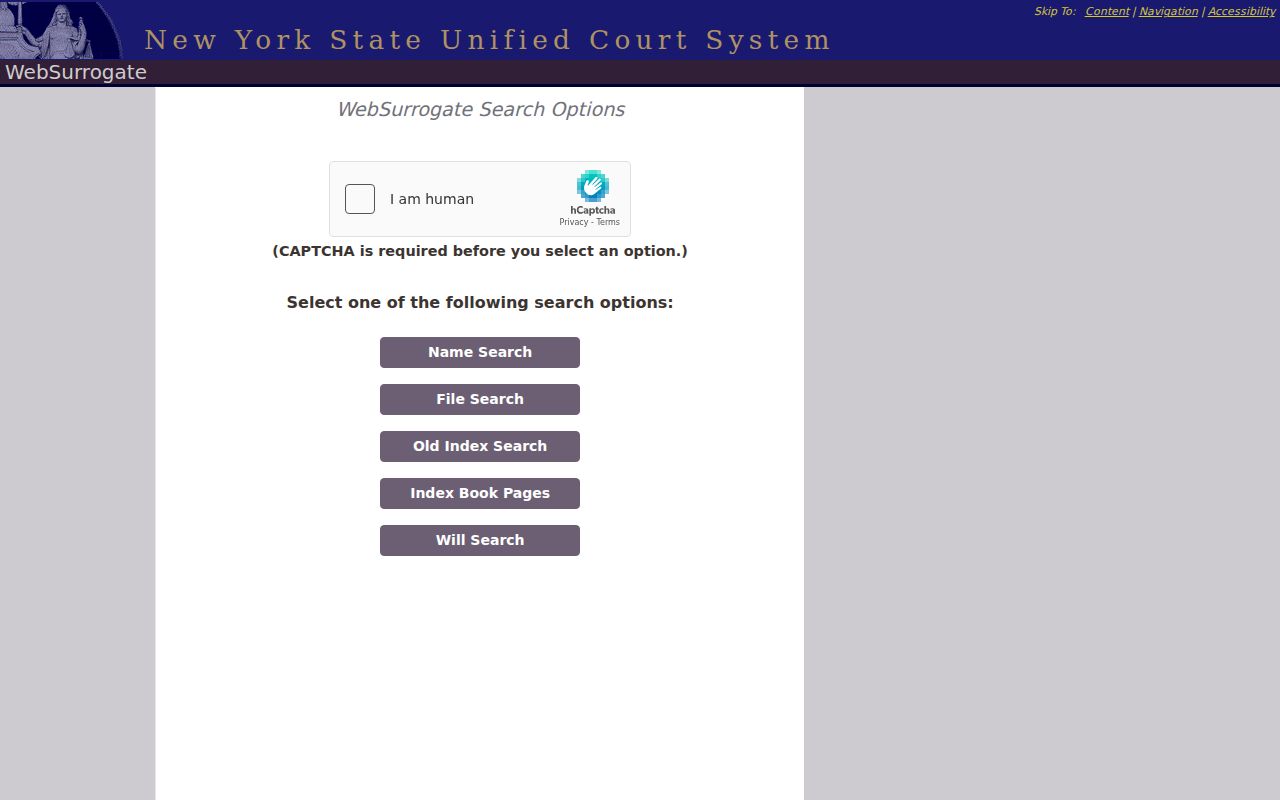
The login screen also shows why some court support papers never appear as open land-record images.
Voter Data Is Not Ownership
The state voter lookup is not a Kings County property source. It exists so registered voters can check their election information. State law restricts voter-file use to elections purposes. A listed election address proves nothing about title. It proves nothing about possession, the assessment owner, or any deed interest either. For ownership research, PIP and ACRIS are the right tools. The deed records carry the weight.
The official voter lookup states its purpose and the fields it requires.
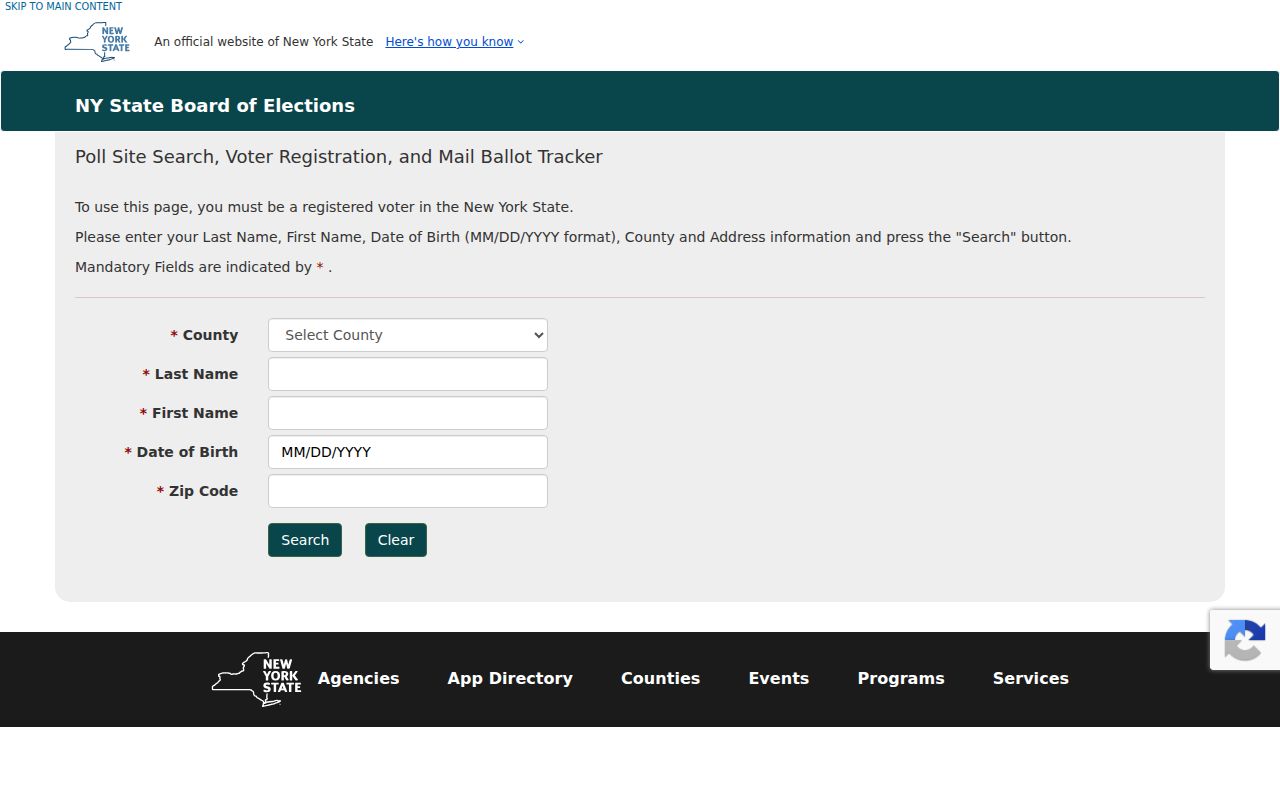
The notice keeps election records outside the Brooklyn property-search workflow.
Brooklyn Building Record Split
A full building history needs two systems: BIS and DOB NOW. BIS holds property profiles, older jobs and filings, occupancy details, complaints, violations, inspections, permits, and equipment records. Start with a house number and street, a BBL, a BIN, or a job, permit, complaint, or violation number. DOB NOW carries the newer applications, certificates, compliance filings, and violations. Its public tools add address, BIN, community board, job number, and zoning-challenge searches.
This split matters. An empty portal does not mean no work occurred. Save the BBL and BIN. Search both systems. Note whether a job predates the newer platform. Older folders, plans, microfilm, docket books, and index cards may sit behind a DOB record request. That request requires an active account. Permits document filed work. They settle nothing about title.
Historic Kings County Research
Brooklyn directories and telephone books run long in NYPL and Brooklyn Public Library collections. Reverse-address directories can tie an old street number to a dated occupant. Sanborn maps show footprints, use, stories, and construction material. Municipal Archives assessment ledgers bridge the historic owner or occupant, ward lot, street, structures, and values to a modern BBL. Each source answers a different question about the same Kings County parcel.
A directory occupant is not automatically the deed owner. Compare the listing year against an assessment entry, a map, census records, a probate file, and the recorded instrument itself. Preserve the title page, year, borough or ward scope, printed address, abbreviations, and page number. Old town names like Flatbush, Gravesend, New Lots, and New Utrecht often point to the right archive series once modern address searching stalls.
Kings County Fraud Monitoring
The Notice of Recorded Document program is free. It sends email or text alerts after a filing is indexed against a registered BBL or address. It blocks nothing. It also never decides whether a deed is valid. Co-op registrations can trigger whole-building notices, since a unit may lack a unique ordinary BBL. When an alert surprises you, open the ACRIS image. Study the parties, parcel, signatures, references, and remarks. Then contact the City Register and get legal help if the filing still looks wrong.
Alerts do not replace an annual review. Search the lot for deeds, mortgages, assignments, satisfactions, liens, and notices. Compare every new instrument with the last known chain and the tax-map history. A correction or routine financing document may explain the notice. An unfamiliar conveyance deserves prompt verification.
FOIL for Kings County Records
New York’s Freedom of Information Law is the fallback. It applies when a city agency holds a described property record that no online index reaches. Address the request to the agency’s records access officer. Name the record, the date range, the address or BBL, and your preferred format. The agency must grant, deny, or acknowledge the request within five business days. If production runs longer, the statute requires an approximate date or a later date certain. A written denial can be appealed administratively.
FOIL has limits. It cannot force an office to build a new analysis or decide title. It also cannot compel the release of exempt material. Standard paper copies up to the statutory size carry the state default per-page charge. Another law or the true reproduction cost can govern instead. Try the portal or counter first for deeds, assessments, maps, and permits. Then reserve FOIL for the one agency record still missing.
Kings County Source Dates Matter
Every Kings County result you pull should arrive with its source date attached. Note the assessment fiscal year. Note the deed execution and recording dates, too. A parcel number can look contradictory. One record may reflect the January taxable-status date. Another reflects a newer map edition or permit-system entry. Dating each document lets a later searcher tell a stale snapshot from a genuine error. It also sends them back to the right custodian for an update or a certified copy from the recorder, assessor, or court docket.